

Back in January 2023, as the traditional winter crisis gripped the NHS, worsened by the additional post-COVID backlog of waiting list patients, Prime Minister Rishi Sunak (remember him?) promised the NHS would be investing to open an additional 5,000 front-line (general and acute (G&A) beds.
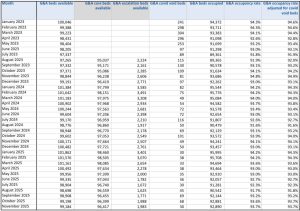
When he spoke, the NHS had just over 100,000 G&A beds available. But during 2023 the total dipped in the summer to just over 97,000, before increasing again.
Nevertheless, by the following January, NHS England Chief Executive Amanda Pritchard declared – to a sceptical reception – that the NHS had somehow delivered the 5,000 extra ‘permanent, staffed beds.’ This turned out to be dependent on a less then subtle sleight of hand.
The increase, NHS England’s press release claimed, was to “an average of 99,750 core beds in place each day.” This, they argued, was “up 2,000 since the start of the year” (when the extra 5,000 had been promised.
So how did they make 2,000 equal 5,000? By claiming that the increase was “against a baseline of 94,500, the original level of core beds planned by NHS trusts in 2022/23.”
This argument proved two things. The first was that the extra 5,000 promise was a con; the second was that if those were the plans, NHS England’s planning was hopelessly unrealistic in 2022/23. Indeed the NHS was last functioning on just 94,000 beds only in three months at the end of 2021, as the NHS bed numbers began to recover after the closures to deal with the Covid peak.
To make matters worse, the same January 2024 press release also claimed:
“This significant boost means the NHS now has a total of 103,277 general and acute beds in place – more than 1,800 more than the same week last year.”
This was not true. In fact the NHS’s own figures for that period show that, far from being a new average, only in December 2023 did the total of G&A beds rise to 99,000 – through the opening of 2,771 temporary ‘escalation beds’.
And the total number of available G&A beds peaked at 101,384 in January 2024 with a combination of just 97,779 “core” beds and 3,585 escalation beds. Its own figures show that at no point in 2024 (or since) has England had a total of 103,000 G&A beds available.
So the claimed new average was a lie, as indeed was the number of ‘core’ (“permanent, staffed”) beds, which peaked at 98,151 in February 2024 and has briefly exceeded 98,000 in only three months since then.
The most recent Urgent and Emergency Care statistics show that, boosted by upwards of 2,000 escalation beds on most days, the total numbers of G&A beds available so far since December have fluctuated around and slightly above the 100,000 mark, although around 1,600 of these are in hospitals that do not take major (Type 1) emergencies.
So there never were 5,000 extra beds, nor were the extra beds that have opened in the winter peaks ‘permanent’ or ‘staffed’. The NHS has left to struggle by with all of the predictable seasonal and population pressures, but without the support that was both promised and claimed to be in place.
And they can’t even produce statistics to correspond to their PR spin!

Dear Reader,
If you like our content please support our campaigning journalism to protect health care for all.
Our goal is to inform people, hold our politicians to account and help to build change through evidence based ideas.
Everyone should have access to comprehensive healthcare, but our NHS needs support. You can help us to continue to counter bad policy, battle neglect of the NHS and correct dangerous mis-infomation.
Supporters of the NHS are crucial in sustaining our health service and with your help we will be able to engage more people in securing its future.
Please donate to help support our campaigning NHS research and journalism.
