

Since 2019, demand for ADHD diagnosis has rocketed, and referral rates quickly outstripped NHS service capacity. Waiting times increased substantially, with reports of several years’ wait in some areas. The Right to Choose policy, which allows NHS patients to access treatment from private providers if they wish, has facilitated large-scale referrals to private companies funded by the NHS.
Private companies, seeing an opportunity, have moved into the sector to offer diagnostic and assessment services. The choice rules require NHS commissioners to fund treatment with a private provider if it has a contract with at least one ICB.
Clinical Partners’ chief executive, Barny Guthrie, told HSJ that they have seen a “huge surge in demand” from NHS and private patients. Psychiatry UK said it too had “experienced rapid growth by helping the NHS to meet significant and rising demand”
As much of the work is carried out online, providers can operate across England and Wales, despite holding only a contract with one ICB. The result has been a massive increase in spending by ICBs, way beyond their budgets for the service.
Overspending
In May 2025, Northamptonshire Integrated Care Board reported that it was having to pay private suppliers of ADHD and autism services three times as much as local NHS providers. Its annual bill of £3m was driven by patients opting for private treatment via Right to Choose. The ICB described the situation as “unsustainable”.
And a recent Guardian investigation reported that the NHS is overspending by £164m a year on ADHD services, with an increasing amount going to unregulated private assessments.
A report by the CHPI in early January 2026 Market failure. How the under-regulated market in NHS funded ADHD services impacts patients and the finances of the NHS found that the NHS is now heavily dependent on private companies to deliver ADHD services, with spending on these companies having increased substantially.
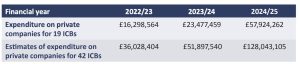
The CHPI report noted that this rapid growth in NHS spending on private companies has been “unplanned and threatens to undermine the financial stability of local NHS services and take funds away from those most in need.”
Standard of Care
In addition to financial issues, there are problems with continuity of care and quality of care. There is no mandatory regulation for providers of ADHD assessments and no certified national qualification or training for those undertaking ADHD assessments.
In March 2025, a coroner issued a prevention of future deaths report on the death of 27-year-old Sheridan Pickett, who died by suicide after receiving an online ADHD diagnosis and taking stimulant medication prescribed by a private clinic.
When Mr Pickett was later admitted to an NHS hospital after an overdose, doctors warned that the ADHD drugs should not be restarted, but that information was never passed back to the private provider, which continued prescribing.
The coroner noted that there were no formal rules requiring information-sharing between private neurodevelopmental services and NHS teams, and warned that without change similar deaths could occur.
In a letter shared with the Guardian, the Midlands partnership university NHS foundation trust acknowledged it was struggling to cope and the trend was contributing to long waiting lists and “reduced capacity for new and complex cases”. The letter also criticised the entire Right-to-Choose system noting that instead of taking pressure off NHS services, the system appears to be recycling it. The trust said the current model “highlights the challenges and limitations” of a system that can diagnose quickly but cannot always find “appropriately skilled staff to support prescribing.”
In December 2025, the company Holistic ADHD Solutions (ADHDNET) was suspended from registration. The company was registered with the Norfolk and Waveney ICB, which meant patients from across England could use its services under “right to choose” rules. A notice on ICB’s website says the suspension is “a precaution to ensure people’s care remains safe”, and that the move was triggered by concerns “regarding service management, safety oversight, and continuity of care arrangements”.
An NHS spokesperson told the Guardian,
“All providers, including those in the independent sector, must meet the same standards for patient safety and quality as the NHS. Where shared care arrangements cannot be agreed, responsibility for prescribing and ongoing oversight remains with the specialist clinician, whether NHS or private.”
However, they also acknowledged “We know we have a lot to do to improve ADHD services and that patients wait too long for a diagnosis, which is why we commissioned an independent ADHD taskforce to consider how to improve care and service models”

Dear Reader,
If you like our content please support our campaigning journalism to protect health care for all.
Our goal is to inform people, hold our politicians to account and help to build change through evidence based ideas.
Everyone should have access to comprehensive healthcare, but our NHS needs support. You can help us to continue to counter bad policy, battle neglect of the NHS and correct dangerous mis-infomation.
Supporters of the NHS are crucial in sustaining our health service and with your help we will be able to engage more people in securing its future.
Please donate to help support our campaigning NHS research and journalism.
