
The desperate hunt for some good news to cheer up private health bosses continues, with the Private Healthcare Information Network (PHIN) getting rather over-excited at the industry’s most recent quarterly figures.
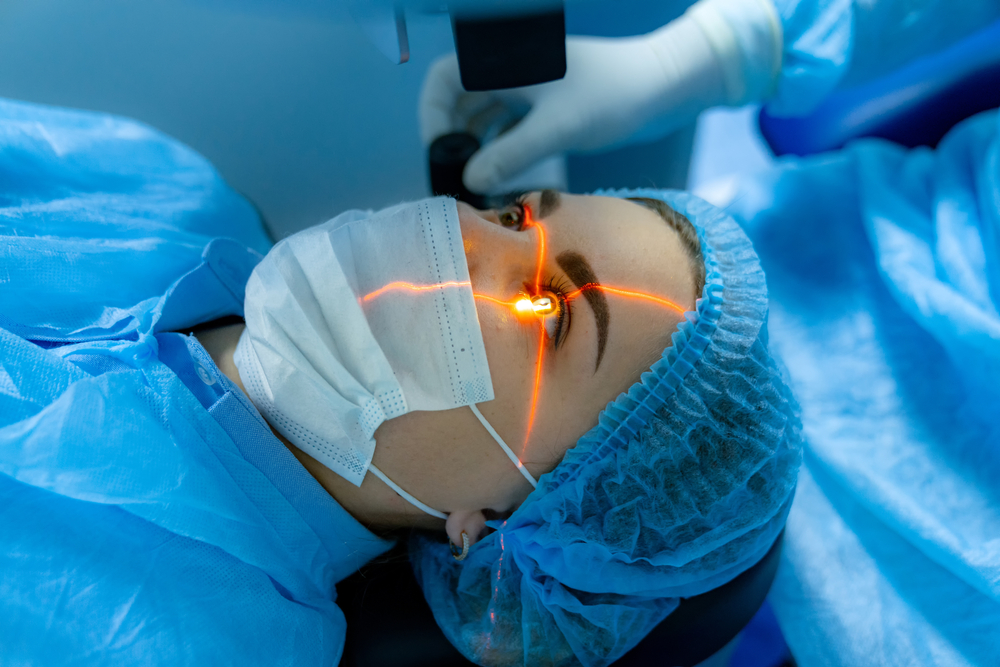
These showed a sudden increase in numbers to a “Record level” of “self-pay” patients trying to dodge NHS waiting lists by paying privately – mostly older people seeking cataract operations.
It’s true that the numbers of self-pay patients has risen to a new record high: but while the private sector spin doctors focus relentlessly on percentages rather than numbers, it’s worth noting that the actual increase is just 5,000 extra patients in the three months April-June 2025, a near-7 percent increase, from 72,000 in January-March 2025.
If we want to know why such a small numerical increase should have caused so much hype, it’s useful to note that quarterly numbers of self-pay patients have been basically flat-lining on or around 70,000 per quarter (280,000 per year) since a sudden post-Covid jump from roughly 50,000 a quarter before the pandemic to around 70,000 from 2021 onwards
That was hailed at the time as only the start of an expected boom in self-pay. Patients were expected to react to the long delays in NHS treatment and the leap in the total on the waiting list from 4.5 million in 2019 to 7.5 million after the peak of the pandemic. But the soaring costs of private treatment limited the numbers who could beg, borrow or steal enough to skip the queues.
There has also been much less of an increase in numbers accessing treatment through private health insurance than the right wing press would have people believe.
Indeed even after the latest increase in both self-pay and insured patients, the total privately funded caseload in private hospitals has risen only as far as the 247,000 level – achieved in the same quarter last year, and just 4,000 (1.6%) higher than the same quarter in 2024.
All this runs counter to all the popular assumption that, with a cash-limited NHS still failing to hit many of its performance targets, the private sector should logically be cashing in and laughing all the way to the bank.
The latest annual opinion poll conducted by Public First for the Independent Healthcare Providers Network (IHPN) suggests a very different situation. It tells us that (from a ‘nationally representative’ sample of 2,086 people):
“Over seven in ten people (71%) would now consider using private healthcare if they needed treatment, maintaining the significant gains seen since 2023 when the figure stood at 63%, while four in ten (40%) say they are likely to use it in the next twelve months. Younger adults continue to lead a generational shift, with 85% of 25–34 year olds open to private healthcare.”
Only by reading through the report can we deduce that this is not just a survey of people’s attitude to private hospitals, but it includes dental treatment, MRI and other scans as well: indeed there is no clear list of exactly what is covered.
It’s reasonable to suspect that following the withdrawal of the NHS in many areas from dentistry, podiatry, physiotherapy and services such as earwax removal (and the misleading adverts on TV and elsewhere from Boots and Specsavers creating the false impression that patients need to go private to access audiology services and up to date hearing aids) are likely to have substantially increased the numbers forced to make use of some private health services.
But despite the number of people saying they would consider private healthcare, this has not translated into a continuing surge in people paying directly for private hospital treatment. Self-pay inpatient and day-case admissions have remained almost static at around 283,000 a year, roughly 70,000 a quarter, since 2023.
A further 670,000 admissions in 2025 are funded through private medical insurance, bringing the total number of privately funded inpatient and day case admissions to just under 953,000.
Clearly the ‘push factor’ of an NHS struggling to keep pace with demand, and handling all of the emergencies and complex cases, has become even stronger in the last few years, while the waiting lists remain long. So if people are willing in principle to go private but don’t, the problem is almost certainly not the lack of adequate communication from the private sector, but the lack of cash in the wallets of patients needing treatment.
Average prices for common operations are eye-wateringly expensive and still rising. This has more impact in the current cost of living crisis, where everyday living is increasing in cost as fast or faster than most wages.
Cataract surgery: £2,000 – £4,000 per eye
Hernia repair: £2,500 – £4,400
Knee arthroscopy (keyhole): £3,850 – £7,000
Gallbladder removal: £6,500 – £7,050
Hysterectomy: £8,000 – £9,500
Knee replacement: £10,000 – £16,000 per knee
Hip replacement: £9,500 – £17,000
For anyone thinking these costs can be dodged by simply taking out private health insurance, it’s worth remembering that private insurers only make money from the majority who do not claim: and so they rule out cover for pre-existing conditions (i.e. people already on waiting lists).
Private insurance of course also covers only elective treatment, not emergency care, so no amount of private health insurance will help anyone skip the trolley waits and corridor care that plague busy NHS acute hospitals. And only in rare circumstances will private hospitals (few of which have ITU facilities available) take on complex cases.
So it should be no surprise that the private sector is treading water rather than forging onwards and upwards: and to make matters worse for them the latest financial squeeze is leading Integrated Care Boards and local trusts to seek ways of reducing their use of private providers to treat NHS patients, especially for ophthalmology (cataract operations) which have seen the greatest growth recently.
PHIN notes
“Admissions at private hospitals funded privately (insurance or self-pay) remained the same [compared to previous quarter]. There was a small decline in admissions to private hospitals that are funded by the NHS.”
PHIN’s data also show that while the proportion of total admissions in England which were in a private setting remained at 6%, and NHS funded day case procedures taking place in private hospitals also remained steady at 5% of the total admissions –the vast majority (88%) of admissions remained ‘NHS Hospital, NHS Funded’.
It’s against this background that the £1 billion sale of Britain’s largest private hospital chain, Spire Healthcare Group, which runs 38 hospitals and more than 55 clinics across England, Wales and Scotland can be seen as an acceptance that profits are not rolling in as expected. The company accounts show £496m (31%) of its £1.6bn revenue in 2025 came from NHS work.
There must now be doubts over how much further this might increase, whoever is controlling the company.

Dear Reader,
If you like our content please support our campaigning journalism to protect health care for all.
Our goal is to inform people, hold our politicians to account and help to build change through evidence based ideas.
Everyone should have access to comprehensive healthcare, but our NHS needs support. You can help us to continue to counter bad policy, battle neglect of the NHS and correct dangerous mis-infomation.
Supporters of the NHS are crucial in sustaining our health service and with your help we will be able to engage more people in securing its future.
Please donate to help support our campaigning NHS research and journalism.
