

by Dr Steve Taylor, GP co-lead, Doctors Association UK
I’ve been a GP since 1993 and most of that time have been a partner in a suburban practice in north Manchester. There have been many Governments, ups and downs of funding, different pressures, but one thing remains: the need for patient care.
In my training year I did a project on GP access, trying to solve the problem of the needs of patients, the wants of patients and the reality of provision. It was hard to solve: but one thing was sure, demand outstripped capacity.
There was a GP recruitment crisis, with more jobs than GPs completing training, and they were paid much less than their hospital colleagues.
Roll on 10 years or so, and radical change happened. The Labour government had listened to the concerns of GPs – that they had too much work, and too few GPs.
A new contract was introduced, and within 5 years, GP numbers were up, appointments increasing, and a GP-to-patient ratio of one GP per 1,800 patients was achieved.
Sadly, this was the peak. With funding gradually declining and patient-to-GP ratios increasing, by 2015, the Health Secretary needed to promise 5,000 more GPs as part of an election pledge.
4 years later, having failed to deliver that promise, the target was increased to 6,000 by the then Health Secretary Matt Hancock.
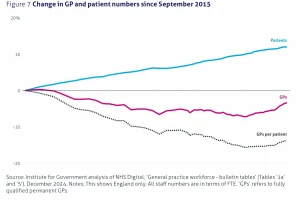
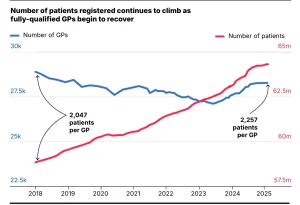
But despite the promises, nothing changed. In fact, the number of GPs was falling, the population was increasing, and the shift of work to GPs was increasing.
The number of GPs trained was increased to 4,000 per year, but between 2015 and 2025, GP funding per patient fell in real terms by £40 (equivalent to a 20% cut).
So there were potentially more GPs available, but no funding to employ them. GPs (Partners and Salaried alike) saw a 20% fall in income, whilst workload increased 20%.
Practices were keen to employ the GPs, but there was no funding to pay them. Patient-to-GP ratios increased to one GP per 2,300 patients, 500 more than the best figure achieved in 2010.
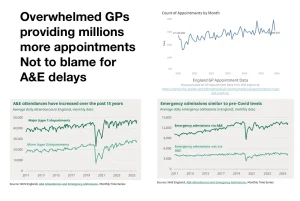
Surprisingly, despite the headlines, GP practices are now providing 20% more appointments than in 2019, having risen from 25 million a month in 2019 to 31 million now (i.e., 6 million more appointments per month, 72 million more per year).
For context, Emergency Departments handle 2.2 million attendances a month and have increased by 200,000 over the same period. GPs were providing more despite having less funding and fewer GPs.
Current situation
Labour entered government in 2024 with the promise to “Bring back the Family Doctor.”
Initial plans were positive: a bit more funding (above inflation), and emergency measures to help employ some of the many unemployed or underemployed GPs.
But initial hopes were soon dashed, with limited funding increases, only marginally above inflation. So we still have too few GPs, while qualified GPs remain unemployed and underemployed due to a lack of funding to recruit and pay them.
Moreover, we have a Government focused on increasing access to GPs –but failing to provide the resources needed.
The latest imposed (not negotiated) GP contract comes with an increase in funding of approximately £1.50 per patient per year (after inflation and costs). Remember, this comes after GP practices have suffered a real-terms £ 40-per-patient cut in funding.
GPs have now voted overwhelmingly – by 99% – to reject this contract. The contract offers minimal funding, but also includes worryingly uncapped demands on practices.
In addition, the new contract establishes a “single point of access” for hospital care referrals, requiring the GP to seek compulsory “advice and guidance” from hospital consultants before a referral is accepted.
This removes GPs’ right to refer, but also effectively removes patient choice.
It is vital that patients get their GP access back but it will only come with funding and trust in GPs to provide it.
The Doctors’ Association UK has produced a discussion document, ‘Your GP, here for you’.
It is based on 2022 research and report by the cross-party House of Commons Health and Social Committee, ‘The Future of General Practice’. Jeremy Hunt, the chair of the committee, had seemed to have a ‘Damascus road’ experience.
But this was sadly soon forgotten when Hunt was installed as Chancellor of Exchequer in Rishi Sunak’s Cabinet.
It’s time for a simpler, well-resourced GP contract that will genuinely ‘Bring back the Family Doctor’. The current one is 255 pages – and not fit for purpose.
A much better system for GP services is still possible, but it needs us all to agree we want it. And it will cost a little bit more: just £1 a week each.

Dear Reader,
If you like our content please support our campaigning journalism to protect health care for all.
Our goal is to inform people, hold our politicians to account and help to build change through evidence based ideas.
Everyone should have access to comprehensive healthcare, but our NHS needs support. You can help us to continue to counter bad policy, battle neglect of the NHS and correct dangerous mis-infomation.
Supporters of the NHS are crucial in sustaining our health service and with your help we will be able to engage more people in securing its future.
Please donate to help support our campaigning NHS research and journalism.
